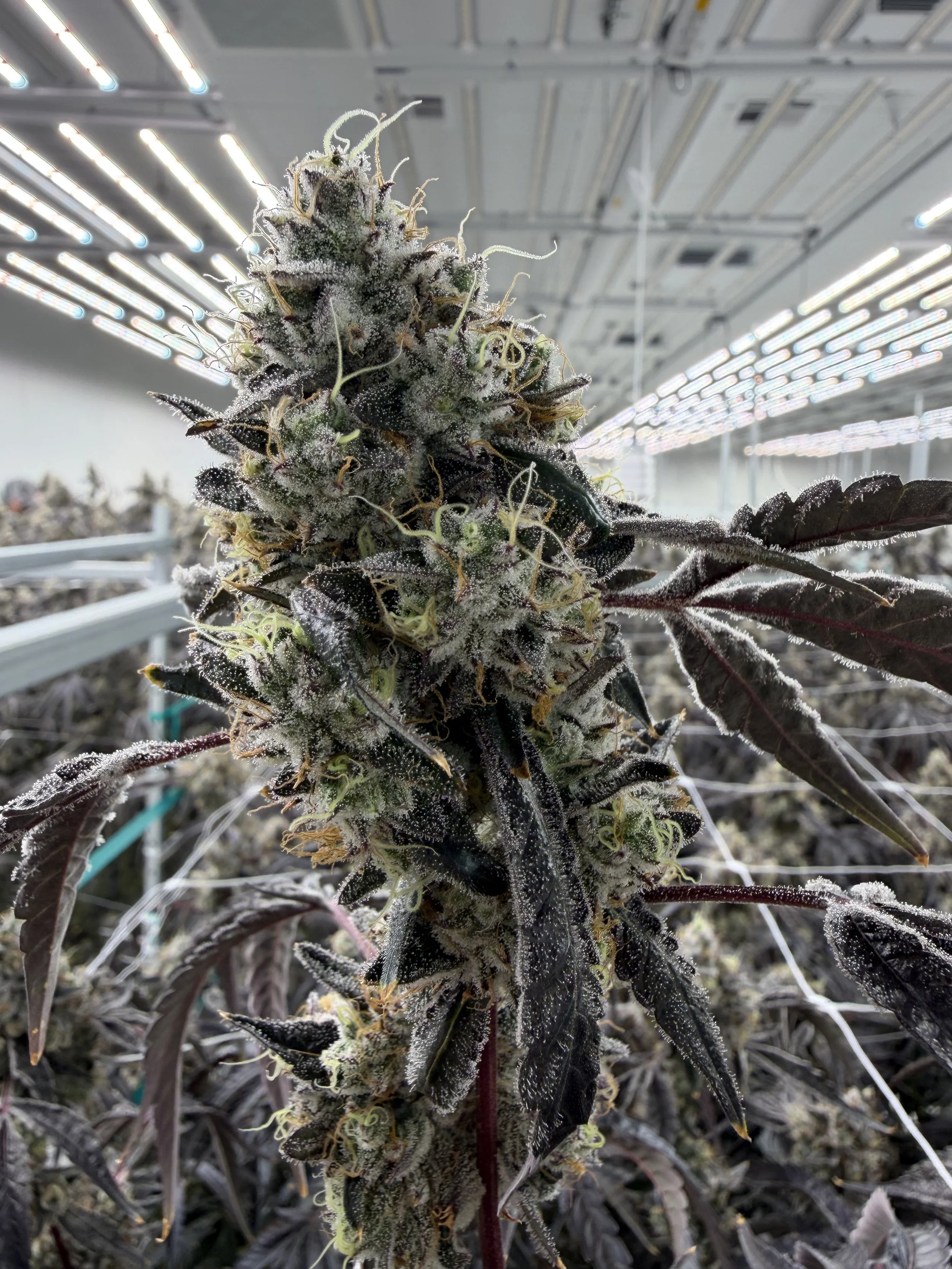
Jungle Boys Cultivation Tour: Key Takeaways
Jungle Boys is running one of the leanest cultivation operations I’ve toured. Here’s what impressed me, why canopy per employee only tells part of the story, and where I see the next opportunities in yield, quality and labor efficiency.
I recently had the opportunity to tour Jungle Boys’ cultivation facility in Florida, and one thing was obvious almost immediately: this place was built to grow cannabis. The tables were clean, the floors were clean, the fertigation area was spotless, and everything seemed to have a purpose. There was very little unnecessary complexity. The facility felt like it had been designed from the ground up around one objective: consistently producing great flower.
What impressed me most, though, was how dialed their operating system appeared to be. They’re running roughly one cultivation employee for every 2,000 square feet of canopy, which is an impressive labor-efficiency number and considerably leaner than many commercial cultivation operations. You could see it on the floor. The team was moving, morale appeared high, and people seemed focused on getting the job done correctly.
What Stood Out at Jungle Boys
A clean facility is not automatically a high-performing facility, but cleanliness usually tells you something about discipline. The grow felt organized, repeatable, and intentionally simple. That matters because commercial cultivation has a tendency to become more complicated as companies scale. More equipment gets added, more processes get layered in, more people get hired, and before long the operation is carrying complexity that does not necessarily improve the plant or the product.
Jungle Boys appeared to have avoided a lot of that. The systems looked streamlined, the people seemed to know what they were responsible for, and the labor model was clearly built around efficiency. Running approximately one cultivation employee per 2,000 square feet of canopy is a strong benchmark, especially when quality is already high.
The Labor KPI I Care About More
Canopy per employee is useful, but it only tells part of the story. It measures how much space each employee is responsible for, but it does not tell you how much high-quality, sellable flower that labor actually produces. A facility can be very lean on headcount and still be leaving value on the table if yield is low, quality is inconsistent, or too much of the harvest falls into lower-value grades.
The labor metric I care about more is labor cost per sellable gram of high-quality flower. That is where yield, quality, labor, and economics come together. Cutting labor may make payroll look better, but if the reduction in plant work lowers packout or creates more small flower, the apparent savings can disappear quickly. The objective is not to operate with the fewest people possible. It is to produce the greatest amount of high-quality, sellable cannabis for every dollar of labor invested.
That distinction matters even more when the quality is already there. Jungle Boys does not need a complete reset. The more interesting opportunity is to improve output without sacrificing the characteristics that make the flower valuable in the first place.
Where I Would Push the System
If I were trying to push the operation further, I would start with the root zone. I would move into my preferred growing-medium strategy, add substrate sensors, and collect more data around irrigation, dryback, EC, and plant response. From there, I would begin engineering crop steering and plant strategy around each cultivar rather than treating every strain the same.
Different cultivars respond differently to irrigation frequency, root-zone conditions, plant architecture, and environmental pressure. The objective is to understand those differences well enough to give each cultivar the opportunity to reach its maximum genetic potential. In a facility that already has strong quality and disciplined execution, that kind of cultivar-specific optimization can create meaningful gains without forcing the entire operating system to change.
The economics become especially interesting if production moves from roughly 70 grams per square foot toward 100. On a 10,000-square-foot canopy, that increases production from about 700,000 grams to 1,000,000 grams per harvest. If labor stays constant, labor cost per gram falls by about 30 percent. Even if I added one additional employee per 10,000 square feet to support more plant work and protect quality, labor cost per gram would still fall by roughly 16 percent.
Once the root-zone strategy, crop steering, and plant work were optimized, I would look at the next layer of canopy productivity: under-canopy lighting. In the right environment, with the right genetics and execution, I would want to push the system beyond 100 grams per square foot and toward 120 or more. But I would only consider that a win if the quality and premium packout remained intact.
What Operators Should Actually Measure
No single KPI tells you whether a cultivation operation is truly efficient. Canopy per employee is useful, but it needs to be viewed alongside the numbers that describe what the canopy and labor are actually producing.
The metrics I would watch together are:
Canopy per employee
Grams per square foot
Labor cost per gram
A-grade packout
Total sellable yield
Cost per gram
Cultivar-level performance
Those numbers tell a much more complete story. If labor goes down but production falls faster, efficiency declined. If yield rises but premium packout collapses, the operation may simply be producing more lower-value biomass. If headcount increases slightly while yield, quality, and A-grade packout improve significantly, the operation may actually become much more efficient.
That was my biggest takeaway from touring Jungle Boys. The facility was difficult to critique because the operating foundation was already strong: clean rooms, simple systems, lean labor, engaged people, and high-quality flower. The opportunity I saw was not to tear the system apart. It was to take a very good operation and keep refining the relationship between plant performance, labor, and quality.
The goal is not to grow cannabis with the fewest employees. The goal is to produce the greatest amount of high-quality, sellable cannabis for every dollar of labor, every square foot of canopy, and every piece of infrastructure in the facility.
Want to know where your cultivation operation is leaving yield, quality, or margin on the table?
Take the Canthropologist cultivation assessment or book a call to review your numbers.